



claudexor

MCP.Pizza Chef: razzant

Claudexor runs on your own computer and puts several coding assistants behind a single chat. Ask a read-only question, or have two of them attempt the same change and review each other before you accept a result. It tracks how much of each subscription is left, moves to another account when one runs out, and shows every change as a patch you approve first. Installing means a Mac app or a command-line install, plus the assistants you already sign into.

Coding

Use This MCP server To

Run the same coding task through two assistants and compare See how much of each subscription I have left Switch to another account when one hits its limit Review every proposed file change before it touches my project Keep one set of project instructions that every assistant reads Run a coding session on a remote machine over SSH

README

Claudexor

npm version npm downloads app downloads total downloads GitHub stars latest release license

Website

Claudexor is a local-first control plane for the AI coding agents you already pay for. It runs Codex CLI, Claude Code, Cursor CLI, OpenCode, and raw API adapters behind one typed interface: a chat of turns where read-only questions resume the vendor's own native session, write turns land as inspectable patches, races pit harnesses against each other with cross-family review, and every claim — cost, quota, web evidence, auth route — is a typed fact you can audit, never a vibe.

Compared to driving a bare Codex or Claude Code session, Claudexor adds the layer the vendors do not ship: best-of-N races with independent reviewers and arbitration; honest budget/quota accounting (unknown cost is never $0); deterministic gates and protected paths; and — since 2.1 — credential profiles: several Claude/Codex/Cursor subscriptions registered side by side, each with its own isolated named login. Live subscription-quota tracking — and the opt-in policy that rotates a spent account out of the way on typed vendor limits — covers the harnesses with a vendor usage source (Claude and Codex); Cursor has none yet. Everything runs on your machine, files are the source of truth, and there is no telemetry.

Current status: v3.3.7. See "Stability at 2.0" below for what is a stable contract and what remains experimental; retired verbs and mode ids hard-error with the new spelling instead of silently aliasing.

If you use Claudexor — or you are an agent whose human does — a star is the one-click way to say it works.
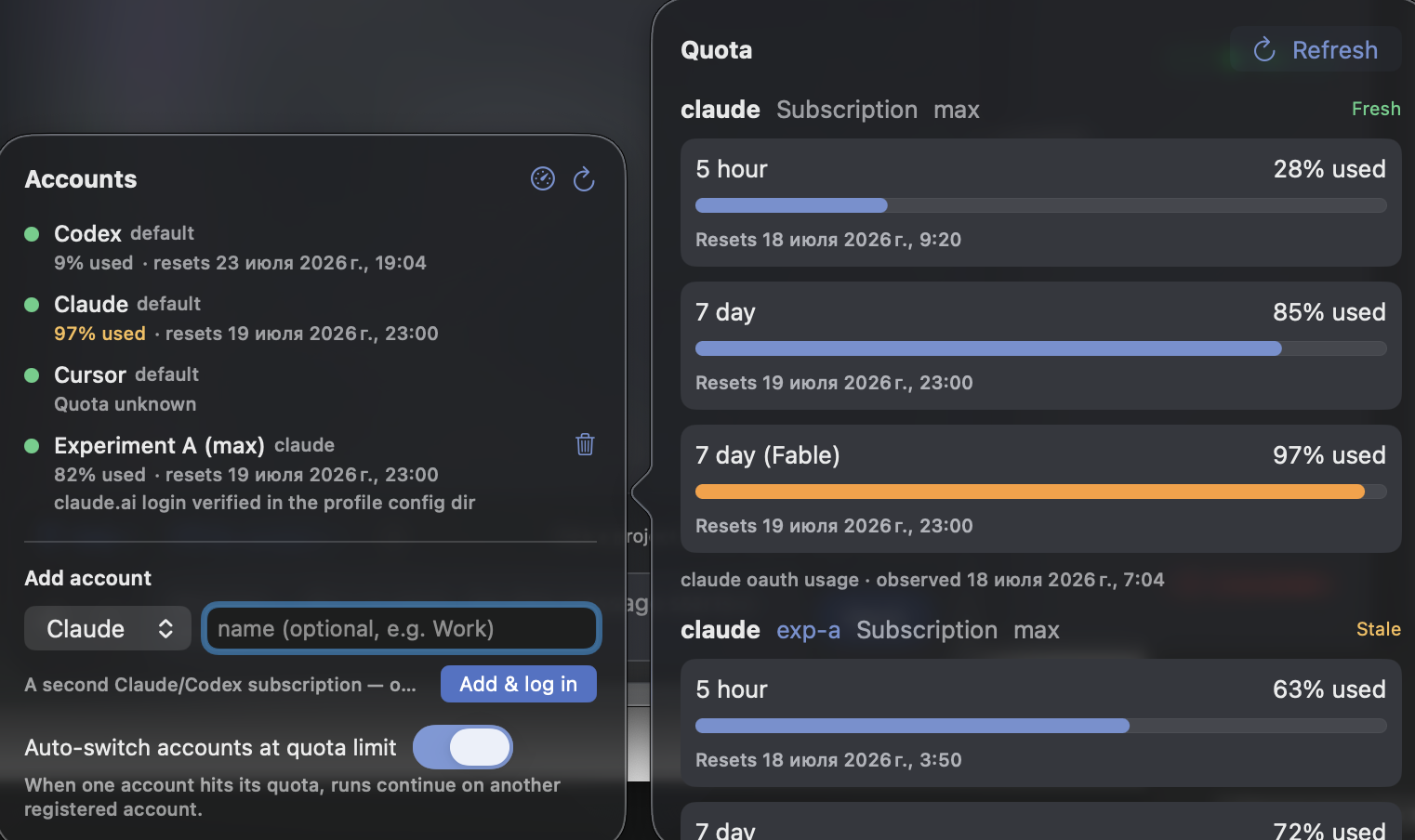
The Accounts and Quota surfaces: multi-account claude/codex/cursor list with live usage, add & log in, auto-switch at quota limit, and per-window 5-hour/7-day quota bars

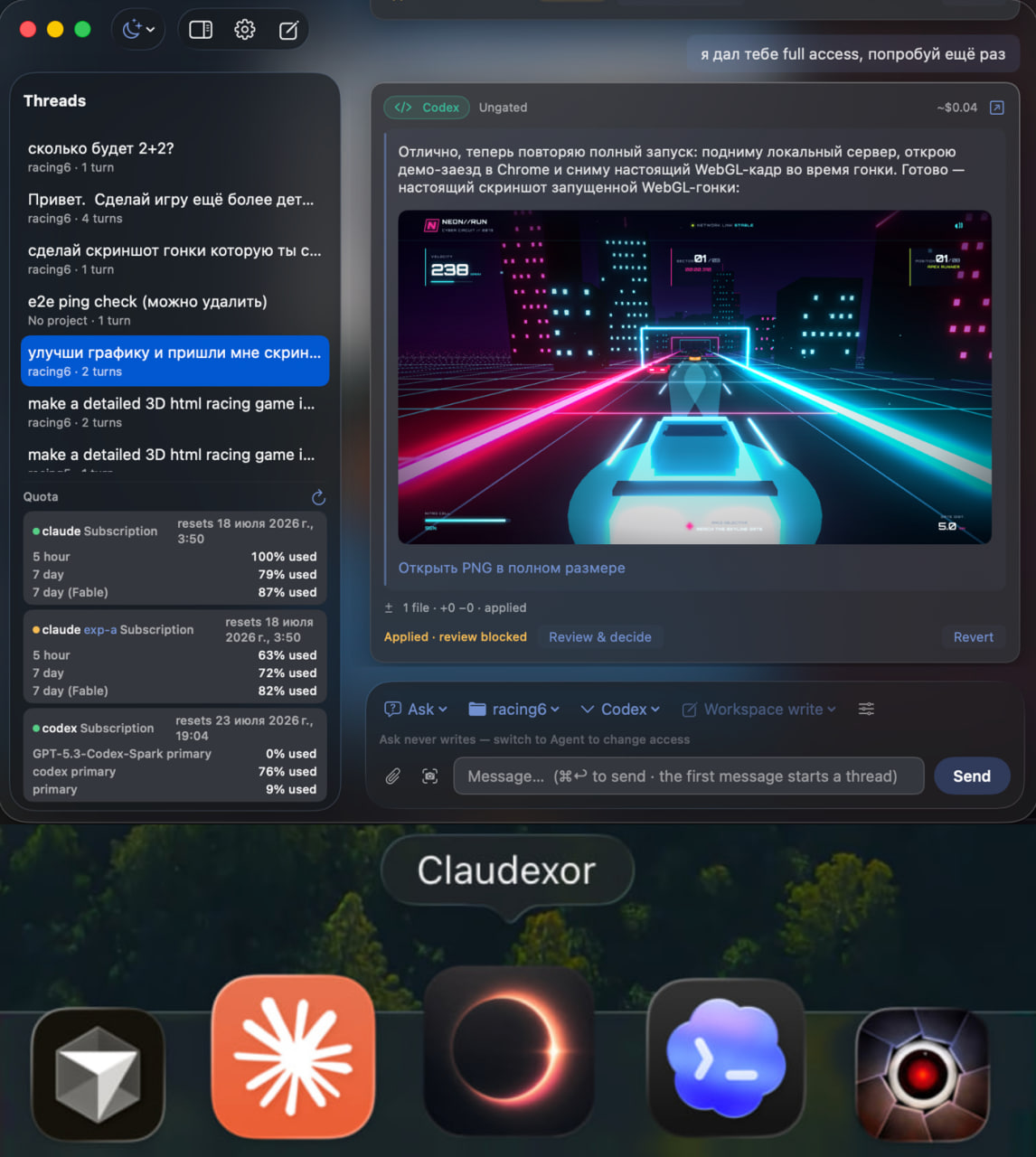
The thread workspace: threads sidebar, an agent turn with an inline artifact preview and applied-change receipt, live per-account quota cards, and the composer

claudexor FAQ

Which assistants does it work with?
Claude Code, Codex, Cursor, and OpenCode, with an extra plug-in for GitHub Copilot.
Do I need a paid subscription?
You need at least one signed-in coding assistant or a provider key; Claudexor adds no model access of its own.
Can I use this to stop running out of quota mid-task?
Yes, it tracks what each account has left and can rotate a spent account out of the way.
How hard is setup?
Technical. Expect Node 20.19 or newer, Git, and a signed-in assistant before your first run.
Does my code leave my computer?
Everything runs locally with no tracking; only the assistants you sign into ever see your work.
Does it work on Windows?
The desktop app is Mac only, though the command-line version also runs on Linux.